

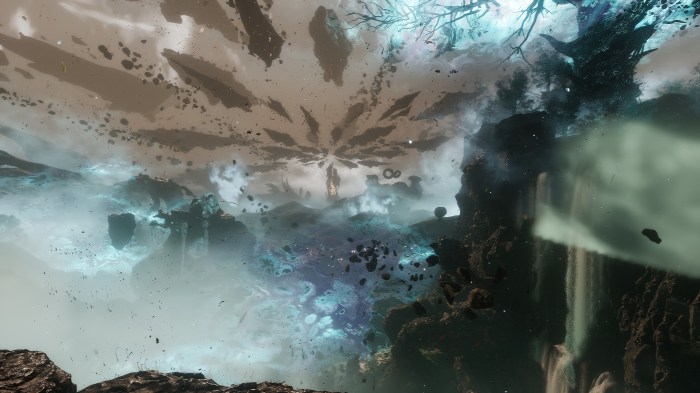
A screenshot I took near the start of the game.
Clair Obscur: Expedition 33 is easily one of the best games I have ever played. It might end up being one of the few I would give a perfect score; I’d need to reflect for a while before I can say for sure, but it’s a contender. However, I’ve had one thing niggling in the back of my mind since I finished it last week, and this piece is my attempt to tease it out.
This post openly discusses the plot of Clair Obscur: Expedition 33, up to and including the ending. If you have any interest in going into this game unspoiled, close the tab.
If you’re familiar with the plot, feel free to skip to the next section.
For the uninitiated, Clair Obscur: Expedition 33 is the debut game from Sandfall Interactive, and they’ve knocked it out of the park. I remember thinking it was a cool premise when it was first announced, and while I was unaware of its release date, I became aware after the wall-to-wall acclaim from… everywhere, in the days leading up to its launch.
Every year, in the city of Lumière, the people await the next Gommage. During the Gommage, a being known as the Paintress paints a number; she started at 100 and has been working down. Every time she paints a new number, everyone at that age and over dies, dissipating into flower petals. The next day, an expedition leaves the city to attempt to put a stop to her Painting. The player assumes control of the eponymous Expedition 33 as they embark on their journey. Before the Paintress appeared, the world was relatively peaceful; her arrival coincided with The Fracture, which threw the world into chaos, sheared reality, and began the Gommages.
The game has a marvellous opening where the main character, Gustave, meets with his ex-lover Sophie, who is about to be Gommaged. The two had broken up over their differing views on having children, and regret hangs heavy in the air as Sophie spends her final hours with Gustave. The whole sequence is heart-wrenching and does a brilliant job setting the stakes.
This brilliance carries through every other aspect of the game. The music is a standout; Lorien Testard did a fantastic job as the composer, with Alice Duport-Percier’s vocals adding a haunting quality to every track with lyrics, occasionally accompanied by Victor Borba. I have played a lot of turn-based games as it’s my favourite genre, and Sandfall put a fun spin on it, with the satisfying counters and AP system adding variety. A particularly entertaining mechanic was whenever the entire expedition successfully parried an attack; the game made a weird yet satisfying sound and time paused for a moment before everyone hit back, together, for enormous damage. I never tired of it.
Okay, I really am about to spoil a bunch of plot points, twists, and the ending now. This is your final warning.
The expedition goes wrong immediately when a man with a cane (oh my god I could do a whole essay on the sound design for his cane) appears on the landing beach alongside a bunch of monsters, and wipes out almost everyone. You play as Gustave, as well as his fellow survivors Maelle, Lune and Sciel. Later, Gustave is replaced by Verso, and you also pick up Monoco (who has a banger battle theme).
When you eventually reach the Paintress, you find out she is not the cause of the Gommage. Her numbers are a warning; she is slowly weakening, and they indicate the people she is no longer able to protect. She was, in fact, keeping the true culprit in check, and upon defeating her, he proceeds to wipe out everyone in Lumière.
You discover that this entire world exists inside a Canvas, situated within a world similar to our own. It is one of many Canvases brought to life by the Dessendre family of Painters, who regularly create new Canvases with their Painting skills. Lumière is but one of many worlds contained within Canvases in their manor.
Outside the Canvas, the Paintress is a women named Aline. Her husband is Renoir. They had three children; Clea, Verso, and Alicia. The Painters in their world are rivals to the Writers. Prior to the events of the game, the Writers had befriended and lured Alicia into a trap; she was subsequently caught in a fire in which Verso was killed and Alicia herself was scarred and left unable to speak, struggling to even breathe.
Lumière was the one and only Canvas that Verso ever painted. Unable to cope with his death, Aline entered the Canvas and was refusing to come out. Once inside the Canvas, she Painted a new version of her family as she sees them. The Painted versions of Renoir and Verso became her protectors, and their role was to stop expeditions from getting to her. She had Painted her two daughters, too; the Painted version of Alicia, who Aline blamed for original-world Verso’s death, retained her inability to speak, and Painted Clea does not show up onscreen.
Eventually, Renoir followed her into Lumière with the aim of forcing her out and destroying the Canvas. His entrance was what caused The Fracture. A while later, Alicia followed, but got caught up in her mother’s power and was reborn as Maelle. In Act III of the game, Maelle awakens to her powers as a Paintress and is able to exercise these powers in a limited way.
The game ends with Maelle and Painted Verso arguing over whether to destroy the Canvas; Maelle wants to preserve it, while Painted Verso wants to destroy it. The player can choose to side with either of them, giving rise to two different endings based on this decision.
What About the People in the Canvas?
My issue with the game is the lack of autonomy for the people living in Verso’s Canvas. The Dessendre family argues about the fate of the Canvas – and all of the people in it! – while Lune and Sciel are right there, and they… never react. The game puts a lot of effort into showcasing the suffering of the people of Lumière. We see it, we hear them talk about it, we’re shown it. It’s done artfully; never gratuitous, but never shying away from how fucked up the whole situation is. Sandfall did a masterful job striking that balance.
But… in the latter half of Act II and into Act III, as we’re learning about the Dessendre family and their ideas for Lumière, Lune and Sciel felt too quiet to me. The discussions never involved them, and they never forced their way into it. It was treated like a Dessendre family affair. The Dessendres never acknowledged the life they had given birth to. The people of Lumière are living, breathing people, with thoughts and feelings and loved ones and favourite foods and hobbies and life, and that’s never considered by a Painter.
Why did Sciel not question this? How did Lune not interrogate Verso about it? Sure, they showed displeasure when the erasure is actually triggered, but how did neither of them interject at any point and angrily proclaim their own right to live? There were so many opportunities, especially when confronting Renoir, that they could have – should have – stepped forward to demand life. To point out this family don’t have the right to kill thousands of people just because they can’t get their shit together. But that… never happened.
If I, the player, was sitting there wondering about the suffering of all these people due to one family’s inability to appropriately deal with grief and resentment, surely they were, too? Why didn’t they?
The most charitable reading of this would be that the lack of focus on their feelings was deliberate, to mirror how the Dessendre family failed to see their humanity. If that was the intention, I feel Sandfall miscalculated; all it did was make it seem like Lune and Sciel didn’t have strong feelings about their world ending. It’s also possible the two of them simply trusted Maelle to advocate for them, but they never said anything about that, and I can’t see them not speaking up. It feels out of character for both of them.
Ultimately, the events of the game were triggered by the Dessendre family’s inability to get their shit together. As a result, thousands of people over the course of decades underwent an untold amount of suffering.
It’s a Whole of Family Affair
While ultimately, Verso or Maelle makes the final decision, I don’t feel the blame should fall entirely on their shoulders.
Aline had displaced her resentment onto Alicia, blaming her for Verso’s death, even though it was the Writers who tricked her and lit the fire.
Renoir was desperate to get his wife back and have his family together again, no matter the cost – especially since being in the Canvas for so long was doing so much harm to Aline.
Alicia was grieving both her brother and the loss of her old self. Permanently scarred and unable to speak, she relished life in the Canvas, free of blemishes, able to communicate as she pleased, and being a top tier fighter. She did not want to go back, under any circumstances.
Clea was barely present because she was barely present. She buried her feelings and went to war with the Writers instead, dismissing everyone else’s feelings, including her own, in the process.
Painted Verso was trapped by everyone else. He was Painted and sustained by Aline because she could not deal with the loss of her son. Maelle later kept him alive because she couldn’t imagine a world without him, and was consumed by guilt due to his dying to save her. Neither of them would let him go, no matter how desperately he wanted it all to end so he could stop grieving.
The family’s fight over the painting pissed me off. Not because it’s bad writing, but because they took the one Canvas that Verso had Painted and made it about themselves. They could have engaged with it in a healthy way, using it as a way to remember him by, going in to visit the world and mingle with the people he had created.
But no; they instead fought over it, with half the family wanting to destroy his one and only creation forever because they cannot get their collective shit together. It’s a beautiful Painting with a vibrant world, and once destroyed, there would be no Canvases from Verso left.
If I were Verso, I’d be rolling in my grave.
In their respective endings, Verso and Maelle are responding to grief; both their own, and that of the broader family’s. They are both reacting to a situation other people have put them in, and it’s unfair to wholly blame them for the decisions they made. They should definitely be held responsible for the consequences, but it’s important to remember the broader context in either case, and how everyone else’s behaviour shares some of the blame.
The Endings Sucked, and I Wouldn’t Have it Any Other Way
It’s rare for unhappy endings to leave me feeling satisfied, but that was the case here. Sandfall’s writing team nailed it. I didn’t like either ending, but they make sense for the characters.
In his ending, Painted Verso made the decision to stop the Painting because he didn’t trust Maelle to let him die. In Maelle’s ending, we see that he was right.
I can see why Painted Verso wanted to destroy it; his family’s fighting was centred around his counterpart’s creation, so he sees it as his duty to destroy it and end the conflict. However, his desire to die doesn’t mean he gets to take everyone else with him.
Maelle’s desire to live doesn’t mean she gets to force the facsimile of her brother to stay with her against his very explicit wishes. It’s also an unhealthy coping mechanism.
Maelle’s ending could have been beautiful. I would have loved to have seen Painted Verso perform his final concert, and as he takes his literal final bow, fade into petals on a sunbeam shining through the window.
But no; Maelle is unable to let her brother go, and with no one else powerful enough to stop her, she keeps him alive against his will.
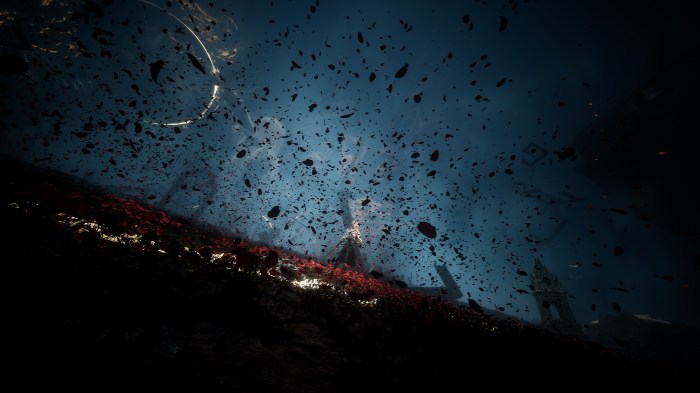
A screenshot I took at the end of the game.
Expedition 33 was a phenomenal game, and easily one of the best I have ever played. If you are even mildly interested, buy it. I’m excited to see what this team crafts next. I was happy to learn that Clair Obscur is going to become a franchise, so we’ll see more of this brilliance in future.
 Musings From a Queer Environmentalist