

I thoroughly enjoyed the first two essays from the Australia Institute‘s new Vantage Point series. The first was about the Australia/America relationship and the second about the issue with centrism as a concept. As such, I was greatly looking forward to the latest essay, which was about Australia’s embattled university sector.
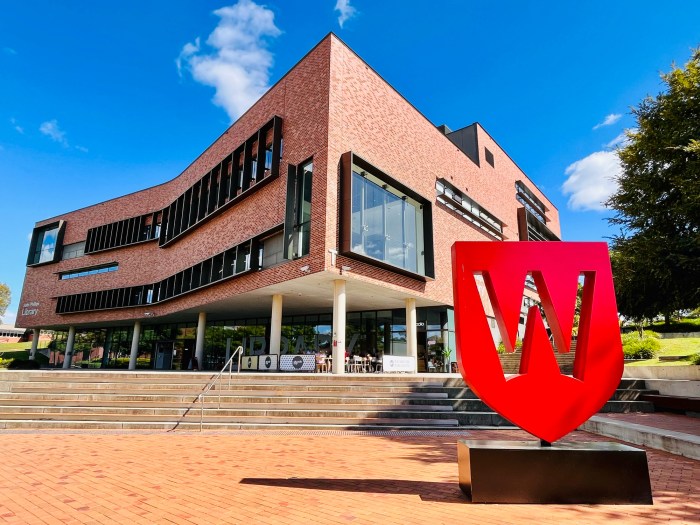
Aiming Higher: Universities and Australia’s Future was written by Western Sydney University’s Vice-Chancellor, George Williams. My favourite part of the book was near the beginning, when Williams discussed the history of university regulations. Weaved throughout was a compelling contextualisation of the corporatisation of universities; as I was not around for the Dawkins reforms or all that followed, it was all new to me. He discussed what the federal government to do to help restore university funding to make it more equitable and prevent the problem from worsening.
Williams also highlighted the role of universities themselves in their unpopularity. Two quotes in the book from former Labor leader and current Canberra University Vice-Chancellor, Bill Shorten, sum this up nicely:
“Too often millennials and Gen Z look at universities and see cold institutions that talk about themselves; obsessing over prestige and rankings”.1
“[Students] want a university that values and encourages a learning community, not a slick and soulless corporation that sees everything through the lens of revenue.”2
I respected Williams’s extensive discussions of inequity in the fee system, and his learnings from interacting with students on social media, in food banks and at community dinners. Reading a Vice-Chancellor explain the hardships his students face, which he had heard from them directly, wasn’t at all what I expected from the book, and I appreciated it.
Other parts of the book, however, baffled me. Williams’s failure to link parts of his writing back to the broader whole left me with a lip-curling feeling of distaste for the book after I had finished.
Generative AI
Williams extols generative AI (genAI) towards the end of Aiming Higher, even going so far as to proclaim:
We must move away from a focus on the transmissions of knowledge and instead concentrate on skills such as critical analysis and creativity where humans can add value to generative AI systems.3
That statement repulsed me to such a degree I had to take a break.
Such a strong emotion arose in me for several reasons. Most fundamentally, the sentence quoted above is an oxymoron and demonstrates a lack of understanding of the effects of this technology on the brain. Using genAI undercuts the very “critical analysis and creativity” skills Williams wants to focus on. Use of genAI software starts to erode these skills immediately, and it gets worse the longer one works with it. There is simply no way to “concentrate on skills such as critical analysis and creativity” whilst using it; it has the opposite effect. Check out the “Rots your brain” section of my previous article on the topic.
Secondly, why are humans adding value to generative AI systems and not the other way around? I want AI to do my laundry and dishes so I can create and relax, not have the machine take over my interesting tasks. GenAI, as it currently stands, cannot actually do that much. ChatGPT was released as a tech demo and should be treated as such, but after the marketing machine kicked in, people bought into the lie that it can do everything. For more on the incapability of genAI, check out the “Wrong, but faster” section in my evidence-based rant.
When you peel away from the hype machine created by the people who build the tech – and have a vested interest in boosting it – you find that most computer scientists do not think chatbots can reach he goal of artificial general intelligence. Would you trust cigarette companies who say smoking is bad for your health when medical researchers and doctors say otherwise? If not, why would you trust the companies making money from the technology over other experts who are not?
Thirdly, Williams spends a great deal of time in the book focusing on inequity amongst his students. While this was admirable, genAI technology, as currently built, magnifies inequalities. The people who build it exploit disadvantaged people, who carry out the grunt work required for it to function4. The data centres required to run it are often placed in communities that lack the capacity or resources to prevent them from polluting their neighbourhoods. Going back to my long article, this time check out the “Power guzzling”, “Water guzzling”, “Exploitative”, “Polluting”, “Theft” and “Makes things cost more” sections.
Finally, it is unclear whether genAI will be sticking around in a huge way for long. At the moment, its rate of use is plateauing or declining. Businesses are not seeing a return on investment. It’s possible the technology will weather this storm and people will continue to use it in droves, but I don’t think it’s going to do well enough to recoup the amount tech companies have invested in it. They need to recover hundreds of billions of dollars in the lifecycle of their data centres, which is about half a decade. I don’t see that happening, and I don’t know what will happen after the bubble pops.
In all, going all in on genAI in universities is misguided, at best.
Corporatisation
Williams rightly critiques the corporatisation of universities and how it came to be this way. However, he seems to miss other signs of this malaise.
Williams discusses the chancellor of Western Sydney University, Jennifer Westacott, saying that “[s]he believes universities must disrupt and lead”, and then quotes her directly:
“[T]he outdated academic structure goes against what students want — which is choice and flexibility”.5
Anyone who follows industrial relations or corporate doublespeak will likely be hearing alarm bells at that statement. That is precisely how corporations justify attacking workers’ rights. They claim to be giving workers what they want, but employers and business groups often use “flexibility” as a common form of spin to justify insecure work and short-term contracts. When workers don’t have a choice in the flexibility of their work, it is harmful.
Williams doesn’t talk much about these other aspects of the corporatisation of universities; this unethical treatment of workers. Not that this wasn’t an issue before, but as per the author himself, it has gotten worse in recent times. He did talk about how universities need to be better workplaces, but failed to place this within the corporatisation context.
“It is hard for academics to be great teachers or to plan their curriculum for the longer term, let alone to build a fulfilling career, if they do not know whether they will be employed from one semester to the next. There are too many examples of universities letting their staff down, whether it be through underpaying salaries or over-relying on insecure work.”6
“Underpaying salaries” is wage theft, especially on the systemic basis some universities have engaged in, and is illegal. The phrase “letting their staff down” is a gross understatement, here. He would have done well to discuss these aspects more in his book; I kept waiting for Williams to bring it up, but that never happened. The extent of wage theft in the sector is truly staggering:
“The national university wage theft tally is now a confirmed $265 million, with a further $159 million set aside by universities to repay workers for suspected wage theft incidents.”
For those playing at home, that is a combined total of $424 million either confirmed or suspected wage theft across the industry. Those figures are from 11 months ago, too, so it may have grown since then.
It’s strange, too, that Williams talks about issues of university corporatisation without discussing his own. His aforementioned boss, Jennifer Westacott, was a senior partner at KPMG for six years. She then moved to the Business Council of Australia (BCA), where she was chief executive for 12 years. According to her LinkedIn profile, she has gone back to KPMG as a special adviser, and is a non-executive director of corporate conglomerate Wesfarmers; these two roles are ones she still holds alongside her current role as Chancellor.
If Williams is going to (rightly) criticise the corporatisation of universities, he’d have done well to start in his own backyard. You don’t get a much better illustration of this than a former long-time CEO of the BCA being Chancellor.
Overall, this was a disappointing third entry in the Vantage Point series. I hope the following books are more like the first two.
1Page 80.
2Page 81.
3Page 61.
4Jones, P. (2022). Work Without the Worker. New Left Books Ltd.
5Page 68.
6Page 85.
 Musings From a Queer Environmentalist