

People talking about trauma making you stronger has always been demoralising to me.
Continue reading The Spectre
People talking about trauma making you stronger has always been demoralising to me.
Continue reading The Spectre
When most people hear the word “sustainability” in a work context, they probably picture someone in an office, writing reports on how to make businesses greener, and… that’s it.
Continue reading What Does Sustainability Work Look Like?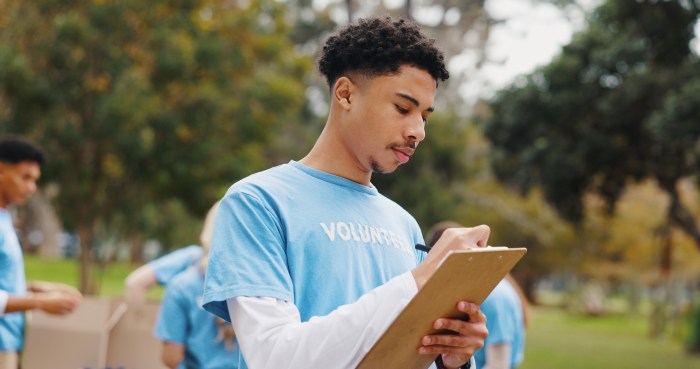
I had a discussion with a friend once who asked for my opinion on a dilemma she had in a course she was doing. I think about it often.
She was in a group where one person talked about how, in order to save paper, a survey their institution regularly holds had moved online. However, some residents in their area did not know how to use computers. So they printed some hard copies and distributed them to those people, but the overwhelming majority of residents were able to complete it online.
Another group member was adamant this was unsustainable. My friend disagreed, and wanted to know what I thought.
I replied that it is, in fact, sustainable.
If you want to take the narrow view that sustainability is only about environmental sustainability, then yeah, you’d think this was unsustainable.
However, when you look at the United Nations’s Sustainable Development Goals, only seven out of 17 relate to the environment, and two of those are kind of also about people. Specifically, SDG 6 is about sanitation – clean water for the sake of people being able to drink it, and SDG 7 is about clean energy – which it stipulates needs to be affordable.
The other SDGs are about societies, or what I like to call social sustainability.
People often forget this, or are completely unaware of it to begin with.
So, protecting and restoring nature is only a third of the work we should be doing. The remaining two thirds is about ensuring fairness in society, such as making sure people who don’t know how to navigate computers can still participate in their local communities.
Specifically, this case would fall under Goal 10, Reducing Inequalities, Target 10.2, Promote Universal Social, Economic and Political Inclusion:
By 2030, empower and promote the social, economic and political inclusion of all, irrespective of age, sex, disability, race, ethnicity, origin, religion or economic or other status.
It also falls under Goal 16, Peace, Justice and Strong Institutions, Target 16.7:
Ensure responsive, inclusive, participatory and representative decision-making at all levels.
The ideal solution, to me, would be to educate those who are uncomfortable using a computer in how to do so. This would have other, positive knock-on effects that would allow these people to become more confident in using computers and other technology in other aspects of their lives, making them more independent in a tech-based society.
In my ideal scenario, if this computer literacy program was taking time to roll out (which is likely), printing surveys for those who had yet to take it would still be my suggested stopgap. Yes, some paper is still being printed, but it would be much less than last year. It would be an improvement.
This reveals part of the problem with the objection mentioned at the start of this article: it’s an issue of perfectionism. The objector seemed to think this initiative was bad because it was still using some paper, overlooking the fact that it had managed to eliminate the bulk of its paper usage by shifting online. As if simply reducing use wasn’t enough; it had to be eliminated all in one fell swoop.
As someone who has extensive work experience in operations and spent a lot of time implementing programs, I can tell you this attitude is asinine. Something like this, for a large organisation, would be a multi-step process. You’d need to do a business case or cost-benefit analysis, design the form, solicit feedback from colleagues and community, make any suggested changes, test the form, fiddle with it some more when something doesn’t work, get all relevant staff onboard (which may include training some of them in the software), and then you can maybe roll it out. Then make more changes to the form on process based on feedback from a broader user base, and prepare a report into how well or poorly it was received and what needs to change for next year.
Changing processes takes a lot of work, and we’re often under-resourced. Something like the example in the previous paragraph could easily take months, especially once you factor in the times you’re waiting for feedback from other people and can’t actively work on it.
With all that being said, even in a scenario where the survey was being printed in its normal amount because its target audience was unfamiliar with computers, I would argue that printing the survey was the most sustainable option.
If you wanted to move it online knowing some people would be left out, I would be asking why your ‘sustainable’ solution is to exclude people from society rather than to source better paper. Or improve participants’ computer literacy. Or literally anything else.
Another issue with looking at sustainability as only an environmental issue is that it ignores the fact that the way we interact with our environment is a byproduct of everything else. Society shapes people and our attitudes, who then shape the environment. Ignoring that aspect, and why people behave the way they do, means you would never be able to get to the root of any problems or create lasting change.
Looking at it holistically means we don’t sacrifice one goal for another, or treat them as mutually exclusive. There are myriad examples of trampling First Nations rights in the name of environmentalism. You also get projects sacrificing biodiversity for the sake of climate projects, such as the NSW government making 60 kookaburra chicks homeless for a renewable energy project.
I think all coal mines and other fossil fuel plants need to be shut down. I do not want them to be shut down overnight because I don’t want the workers in those industries to be left without a way to support themselves or their families. The transition needs to be managed, in conjunction with the workers, to make sure nobody gets left behind.
You can see a great example of this in Collie, Western Australia where the community, Climate Justice Union (CJU), and other stakeholders got together to propose alternatives to the local coal mining industry. The state government has been working with the community on this; you can read more about their initiative here, though I prefer CJU’s report linked above1.
The SDGs certainly aren’t perfect. I have a couple of issues with them, one of which is that they need to centre First Nations people and their knowledge. There are a couple of targets mentioning them related to hunger2 and education3, but these are about doing things to First Nations people. There is nothing in them about working with them.
The hunger target literally talks about providing First Nations people with resources, with no words devoted to tapping into the extensive knowledge they possess of their own land or empowering them to take care of themselves and the land they steward. This target is paternalistic, and achieving it would mean trapping First Nations people in a cycle of dependency. The right way to go is to empower them to care for their own lands, like they used to before we showed up as thieves and murderers; they do not need more bullshit from colonial governments.
Another issue is that people like me are erased. I am genderfluid. Many people close to me are trans. All of the goals, targets and indicators about gender focus on women. I and many of my loved ones are not represented; trans, non-binary, and gender diverse people do not exist in any of the Goals.
Not represented, as well, are people who were unable to participate in the consultation process. Feedback was solicited via online survey, which means it is biased toward societies with easy access to internet and the devices able to make good use of it. The UN made admirable efforts to get people out to places not connected to the internet, but ultimately, it was much easier for someone in a country or community in the West than it was for someone from outside it.
While they could be improved, the SDGs are still a useful framework. By far the best thing is how universal they are. I studied with people who said the distinct symbols associated with each goal has helped them to find people working in their field who they wouldn’t have otherwise connected with. Once found, they could flag a translator to help them figure out how their work intersected, and exchange contact details so they could stay in touch. That’s so cool!
They’re also useful as a general communication tool. I have found, when talking to people who are not involved in environmental justice work, that it is powerful to be able to point to a set of 17 goals with 169 accompanying targets from a major international organisation that every country in the world has signed onto. As many issues as the UN has, initiatives like this still have weight.
Only looking at sustainability through an environmental lens is too narrow. The society we live in is just as important; making sure our systems work for people and planet. In fact, since environmental policy is shaped by society, ignoring it means you’re missing a huge part of the picture and won’t be able to get anywhere toward solving wicked problems.
When you’re designing sustainable solutions, remember that there’s more to it than the green stuff. Make sure you’re not leaving anyone behind.
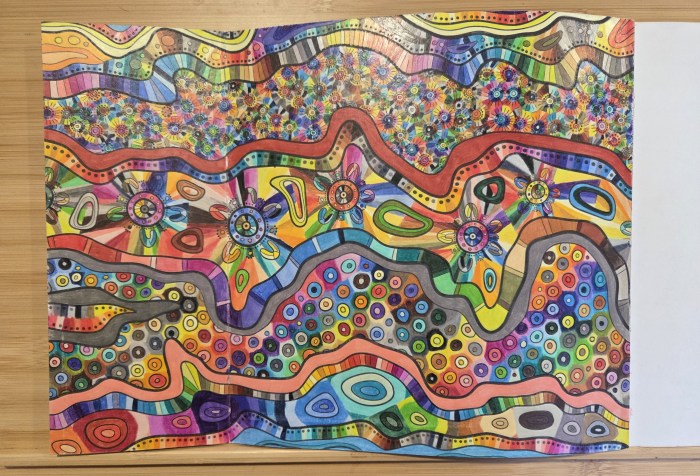
Late last year, I decided to find something I could do on my phone for those times when I was too tired to think or read, but wanted to do something while I was waiting for… an appointment, a train, a friend to show up. Something mindless.
Continue reading Why Is The Colouring App Industry A Rort
Journalists are not doing their job.
Continue reading Political Commentary Is Treated As A Team Sport
AHHHHHHHHHHHHHHHHHHHHHHHHHHHHHHHHHHHH
Continue reading The Annihilation of the Sustainability Sector
I am so tired of people taking the erosion of stability for granted, or, worse, framing it as an unambiguously good thing.
Continue reading I Just Want Stable Work
I thoroughly enjoyed the first two essays from the Australia Institute‘s new Vantage Point series. The first was about the Australia/America relationship and the second about the issue with centrism as a concept. As such, I was greatly looking forward to the latest essay, which was about Australia’s embattled university sector.
Continue reading Contradictions in Aiming Higher
Expedition 33 was a brilliant game in a number of ways, but I loved the polearms on show in particular.
Continue reading Polearms and Expedition 33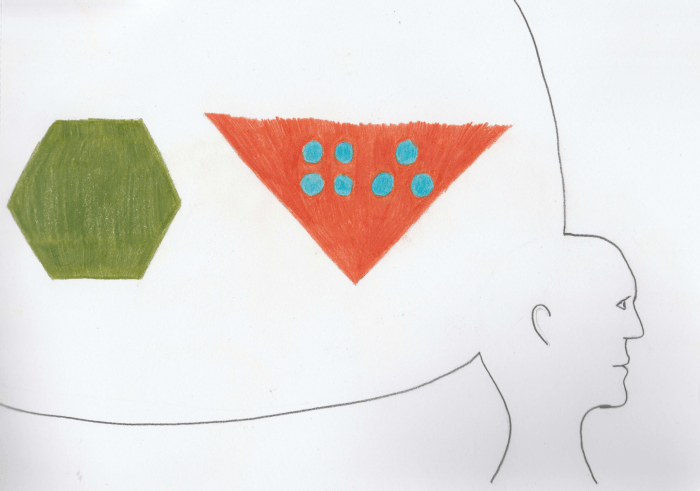
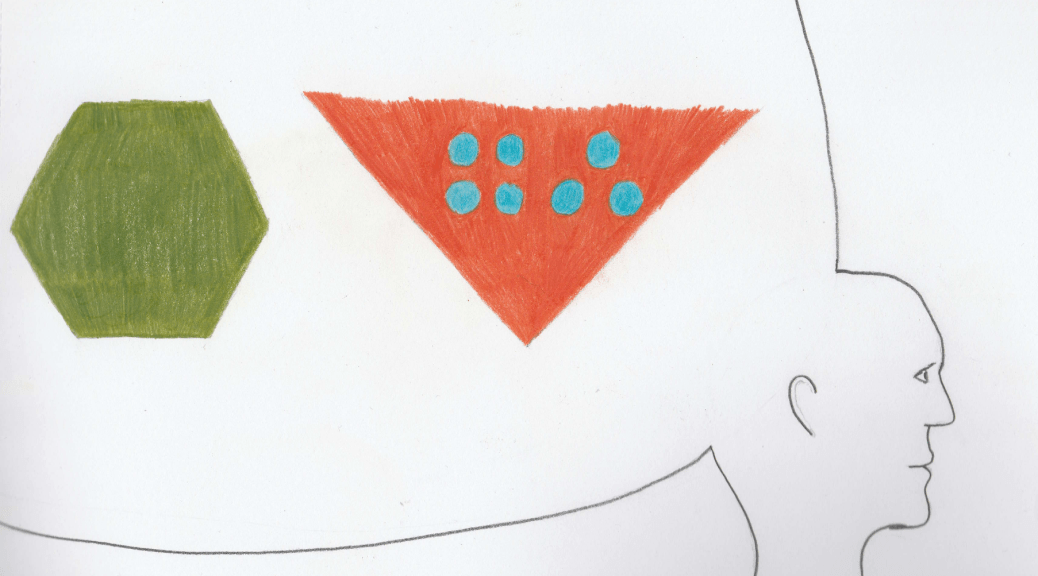
I learned recently that internal monologues are real. Up until a few months ago, I thought they were a joke invented by sitcoms.
Continue reading I Think in Colours, Shapes, and Concepts




 Musings From a Queer Environmentalist